
Tiny homes have become increasingly popular thanks to their affordability, sustainability, and efficient use of space. While smaller homes generally require less maintenance than traditional houses, one area that should never be overlooked is the roof.
A well-maintained roof protects the entire structure from Australia’s harsh weather conditions, helping homeowners avoid expensive repairs while preserving the home’s appearance and value.
Whether your tiny home features concrete tiles, terracotta tiles, or Colorbond roofing, regular inspections and maintenance can significantly extend its lifespan.
Small Roof, Big Responsibility
Many homeowners assume a smaller roof means less maintenance. While there is less surface area to inspect, every part of a tiny home’s roof plays an important role in protecting the structure.
Because the internal living space is compact, even a minor roof leak can quickly affect insulation, ceilings, wall linings, cabinetry, and electrical systems.
Preventative maintenance is almost always less expensive than repairing water damage after a problem develops.
Organic Growth Is More Than Just an Appearance Issue
Tiny homes are often built in natural surroundings where trees provide privacy and shade.
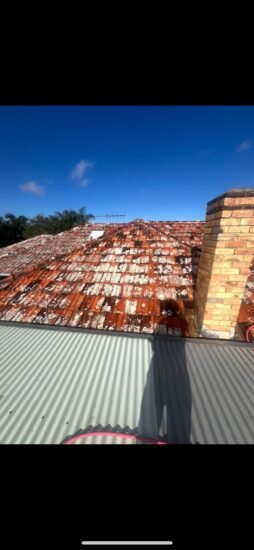
Unfortunately, shaded roofs remain damp for longer after rain, creating ideal conditions for moss, algae, mould, and lichen.
These organisms don’t simply change the appearance of the roof—they retain moisture against roofing materials, which may accelerate deterioration over time if ignored.
Regular inspections help identify these issues before they become widespread.
Don’t Ignore Gutters
Leaves, sticks, and organic debris can accumulate surprisingly quickly on smaller roofs.
Blocked gutters prevent water from draining correctly, increasing the chance of overflow and moisture problems around fascias and external walls.
Cleaning gutters at least once or twice a year—more often if your property is surrounded by trees—helps keep rainwater flowing away from the home as intended.
Why High-Pressure Cleaning Isn’t Always the Answer
Many homeowners assume pressure washing is the quickest solution for roof cleaning.
However, excessively high pressure may damage some roofing materials, remove protective coatings, or dislodge mortar on older roofs.
Professional soft washing focuses on eliminating biological growth while using cleaning methods appropriate for the roof’s condition.
For tiled roofs in particular, choosing a company experienced in tile roof cleaning can help restore the roof while minimising unnecessary wear.
Check Your Roof After Severe Weather
Australia’s weather can be unpredictable.
After strong winds, storms, or hail, it’s worth carrying out a visual inspection from ground level.
Look for:
- Broken or displaced roof tiles
- Fallen branches
- Damaged flashing
- Blocked gutters
- Excessive debris
If anything appears unusual, arrange a professional inspection before minor issues develop into major repairs.
Extend the Life of Your Investment
A tiny home represents a significant investment, and protecting it starts from the top down.
Routine maintenance helps preserve roofing materials, improves the home’s appearance, and reduces the likelihood of unexpected repair costs.
Scheduling occasional professional cleaning and inspections is often one of the simplest ways to maximise the lifespan of your roof.
Homeowners looking for experienced exterior cleaning specialists can learn more about the services offered by Aspire Pressure Washing, including roof, driveway, and exterior cleaning solutions designed to help maintain residential properties across Melbourne.
Final Thoughts
Tiny homes may be smaller, but the importance of roof maintenance remains exactly the same.
By removing organic growth, keeping gutters clear, inspecting the roof after storms, and addressing problems early, homeowners can protect their investment for many years to come.