

Overcoming Extreme Pressures and Temperatures
The ocean’s depths present a harsh environment. Pressures can crush most equipment, and temperatures are near freezing. Underwater ROVs are built tough to handle these conditions. They use strong housings to keep delicate electronics safe from the immense squeeze of the water.
Think about the pressure at 6,000 meters. It’s like having an elephant standing on a small coin! Engineers use special computer programs to figure out how to build housings that won’t collapse. These housings are then tested a lot before they ever go into the ocean. This careful design is key for any underwater ROV mission.
Navigating Zero Visibility Conditions
It’s dark down there, really dark. Sometimes, the water is also cloudy with stirred-up sediment. This makes it hard for pilots on the ship to see what the ROV is doing. Sonar helps, like a bat’s echo-location, to map the area and avoid bumping into things. But getting a clear picture for fine tasks is still tricky.
When visibility is bad, ROV operations can slow down or even stop. Waiting for the water to clear can cost a lot of time and money. This is where new tech comes in. Scientists are working on ways to combine sonar data with what little visual information the ROV can get. This helps the ROV perform more precise actions even when it’s hard to see.
The Role of Underwater ROVs in Deep Sea Exploration
Underwater ROVs are changing how we explore the ocean. They can go places humans can’t, like extreme depths or dangerous spots. This lets us see parts of the ocean that were previously off-limits. ROVs are vital tools for scientific discovery.
These robots help us map the seafloor, study marine life, and collect samples. They are like our eyes and hands in the deep sea. Without them, much of what we know about the ocean would still be a mystery. The ongoing development of underwater ROVs means we can keep pushing the boundaries of exploration.
Advanced Technology Enabling Underwater ROV Operations
Utilizing Sonar for Navigation in Turbid Waters
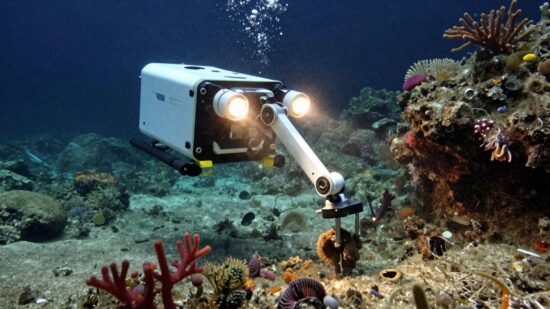
Exploring the ocean’s murky depths presents a real challenge. When visibility drops to zero, traditional cameras on underwater ROVs become useless. This is where sonar technology steps in. Sonar uses sound waves to map the surroundings, allowing ROVs to ‘see’ even when the water is thick with sediment. This acoustic data helps pilots steer clear of obstacles and understand the general layout of the seafloor. It’s like echolocation for robots, a vital tool for any ROV operating in less-than-ideal conditions.
However, sonar alone isn’t always enough for delicate work. While it’s great for avoiding big rocks, it doesn’t offer the fine detail needed for intricate tasks. Think about trying to pick up a fragile artifact or carefully collect a sample. Standard sonar resolution can be too low for that kind of precision. This limitation means that sometimes, ROV operations have to pause until the water clears, which can be a costly delay.
Combining Optical and Acoustic Data for Dexterous Tasks
To overcome the limitations of sonar and cameras, scientists are working on smarter ways to combine data. The idea is to blend the visual information from cameras with the spatial mapping from sonar. This fusion allows ROV pilots to get a more complete picture of their environment. They can use sonar to understand the general shape and distance of objects, and then switch to optical data for the fine details when visibility permits.
This combined approach is a game-changer for performing complex maneuvers. Imagine an ROV needing to manipulate a piece of equipment or collect a delicate biological sample. By integrating optical and acoustic data, the ROV can be guided with greater accuracy. This allows for more precise control, making previously impossible tasks achievable even in challenging underwater settings. The goal is to give ROVs the dexterity needed for scientific sampling and infrastructure work.
The Importance of Robust Underwater ROV Design
Building an underwater ROV means thinking about some extreme conditions. The pressure at the bottom of the ocean is immense – imagine an elephant standing on a postage stamp! ROVs need strong, pressure-resistant housings for all their sensitive electronics, like cameras and computers. Engineers use computer simulations, a process called finite element analysis (FEA), to test these designs before they’re even built.
Beyond pressure, ROVs face other environmental hurdles. Extreme cold, saltwater corrosion, and the sheer remoteness of their operating locations all demand tough construction. The materials used must withstand these harsh elements for extended periods. A well-designed ROV isn’t just about advanced sensors; it’s about building a vehicle that can reliably function and survive in one of the planet’s most unforgiving environments. This robust design is key to the success of any underwater ROV mission.
| Component | Challenge Addressed |
| Pressure Housing | Extreme water pressure |
| Corrosion | Saltwater environment |
| Electronics | Low temperatures, pressure |
| Thrusters | Maneuverability in water |
Underwater ROVs: Essential Tools for Marine Science
Monitoring Ecosystems and Documenting Changes
Underwater ROVs are changing how we keep an eye on ocean life. They let scientists watch what’s happening in places too deep or too rough for people. Think of it like having a remote camera that can go anywhere. These machines help us see how coral reefs are doing or if fish populations are shifting. ROVs provide a consistent way to observe these environments over time. This helps us spot problems early, like pollution or the effects of climate change, before they get too bad. It’s all about getting a clear picture of what’s going on down there.
Collecting Accurate Scientific Data
Getting good data from the ocean floor is tough. ROVs make it much easier. They can carry all sorts of sensors to measure things like water temperature, salinity, and chemical levels. They can also take high-definition video and still images. This means scientists get reliable information without having to risk going themselves. The data collected by underwater ROVs is key to understanding ocean processes. This information helps us make better decisions about managing marine resources and protecting ocean habitats. It’s like having a super-accurate notebook that can go to the bottom of the sea.
Making Ocean Research More Accessible
Before ROVs, exploring the deep ocean was really expensive and required big, specialized ships. Now, even smaller research groups can use these underwater robots. This opens up ocean science to more people and ideas. Underwater ROVs help democratize ocean exploration. You don’t need a massive budget to get started. This means more discoveries are likely to happen. It’s exciting to think about all the new things we’ll learn because these tools are becoming more common.
Communication and Control of Underwater ROVs
Tethered Communication for Real-Time Control
Underwater ROVs, or Remotely Operated Vehicles, rely heavily on a physical connection to a surface ship. This connection, a robust tether, is more than just a power line; it’s the lifeline for communication. Through this cable, pilots on the ship can send commands and receive data in real-time. This direct link is vital for precise maneuvering and immediate adjustments, especially when dealing with delicate tasks or unexpected situations.
The tether allows for a constant flow of information, enabling pilots to see what the ROV sees via video feeds and to control its robotic arms with accuracy. This real-time control is what makes ROVs so effective for complex operations. Without this tethered communication, the ROV would be far less responsive to the pilot’s intentions.
This constant, high-bandwidth connection is the backbone of most deep-sea ROV operations. It allows for immediate feedback, making intricate work possible even in challenging environments. The tether is the key to the ROV’s ability to act as an extension of the human operator’s will.
Challenges in Deep Ocean Communication
Sending signals through water is tricky. Radio waves don’t travel far, so traditional wireless methods are out. Acoustic signals can go further, but they’re slow – too slow for live video or precise control. This means that for deep ocean ROVs, the tether is often the only practical way to maintain a strong connection.
Even with a tether, depth presents problems. The sheer length of cable needed to reach extreme depths can cause signal degradation and make the tether itself difficult to manage. Imagine trying to control a robot miles away with a cable that’s thousands of miles long; it gets complicated fast. This is where the challenge of deep ocean communication really hits home.
The physical limitations of transmitting data through water, especially over vast distances, create significant hurdles for maintaining a reliable and fast connection with underwater robots.
Future Innovations in Underwater Connectivity
Scientists and engineers are looking for new ways to improve underwater communication. One idea is to use light, similar to how space probes communicate. Lasers could potentially send data much faster than current acoustic methods, even over long distances.
Another area of research involves developing more advanced tether materials that can handle greater depths and transmit data more efficiently. There’s also interest in hybrid systems, perhaps using acoustic signals for general location and status updates, while relying on shorter-range optical links for high-bandwidth tasks when the ROV is close to a support vessel.
The goal is to reduce the reliance on bulky, long tethers and explore wireless options that offer more freedom and reach. This will allow ROVs to explore even deeper and more remote parts of the ocean with greater ease and capability.
Diverse Applications of Underwater ROVs
Scientific Sampling and Environmental DNA Collection
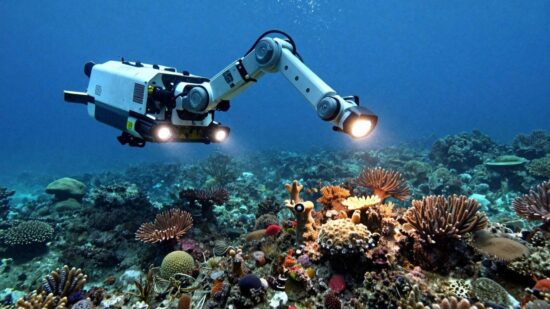
Underwater ROVs are incredibly useful for collecting samples from places humans just can’t go. Think about grabbing sediment from the ocean floor or water from specific depths. These robots can do it with precision. They’re also key players in collecting environmental DNA, or eDNA. This is genetic material shed by marine life into the water. By filtering water, ROVs help scientists identify species present in an area, even if they don’t see the animals directly. This method is changing how we track biodiversity.
Infrastructure Inspection and Repair
Beyond pure science, ROVs are workhorses for industry. They regularly check the condition of underwater structures like oil pipelines, communication cables, and offshore wind turbine foundations. These inspections are vital for safety and preventing environmental disasters. If a problem is found, ROVs can often perform minor repairs or assist human teams, saving significant costs and risks associated with sending divers to extreme depths. The ability of ROVs to operate in challenging conditions makes them indispensable for maintaining our subsea infrastructure.
Hazardous Task Completion and Munitions Removal
Some ocean tasks are just too dangerous for people. This is where ROVs really shine. They can be used to investigate and disarm unexploded ordnance (UXO) found on the seafloor, a critical job for safe maritime operations and coastal development. ROVs can also handle tasks involving hazardous materials or work in environments with extreme temperatures or pressures. Their remote operation capability means that even if something goes wrong, the risk to human life is eliminated. The use of ROVs in these high-risk scenarios is a testament to their advanced capabilities.
The Future of Underwater ROV Technology
Enhancing Dexterity and Operational Capabilities
Future underwater ROVs are set to become even more nimble. Think robots that can perform surgery on delicate coral reefs or carefully collect samples without disturbing the surrounding environment. This means better robotic arms and finer control systems. The goal is to make these machines as precise as a human hand, but capable of working in places humans can’t go. We’re talking about ROVs that can handle complex tasks in zero visibility, using a mix of sonar and optical data to
Looking Ahead
So, these underwater robots, ROVs and their cousins AUVs, are really changing how we learn about the ocean. They let us see and collect data from places that are just too tough for people to go. Even with challenges like murky water or super deep spots, the tech keeps getting better. This means we can find out more about our oceans, which is super important for taking care of them. It’s exciting to think about what else we’ll discover with these tools in the future.