
Loft plans for tiny houses are among the most requested options for individuals seeking a simple life and a way to save money without feeling uncomfortable at home. In the United States, many citizens are transitioning to smaller living spaces because they are cheaper to build, easier to maintain, and more environmentally friendly. The most notable feature that can make a small house habitable is a loft. This implies that you can maintain such a small house while still having space to sleep, store, or even set up a small workstation. Loft designs for tiny houses let you separate your living and sleeping spaces without building an entire second floor. This article will teach you tiny house plans with loft actually are, why they are such effective designs, how to design them correctly, and what mistakes to avoid. We will consider various loft types, access, safety issues, and real-life layout designs. At the end, you will understand better than the rest how to select or build 2-bedroom tiny house plans with a loft that fit your lifestyle.
What are The Tiny House Plans with a Loft?
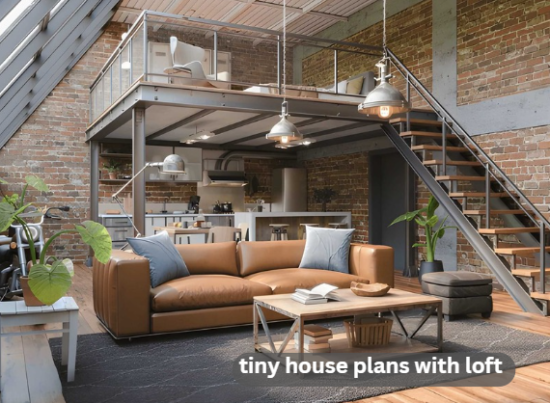
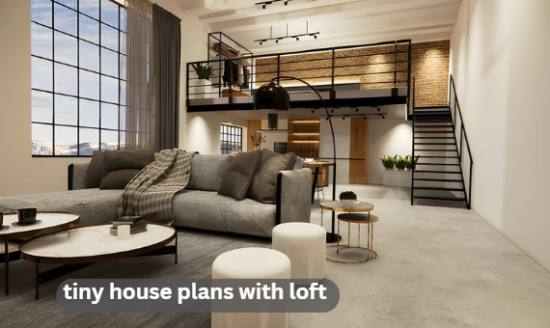
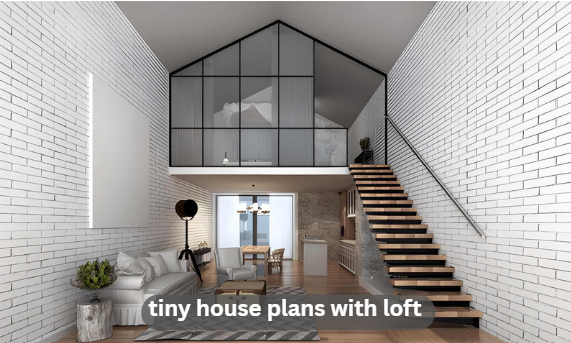
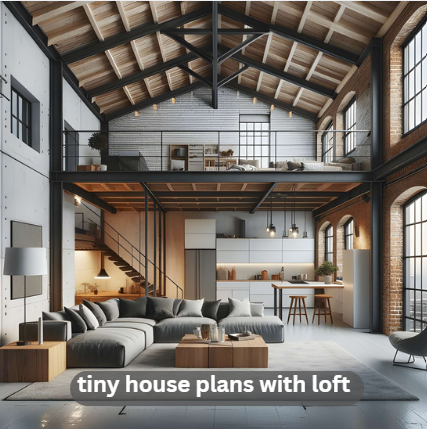
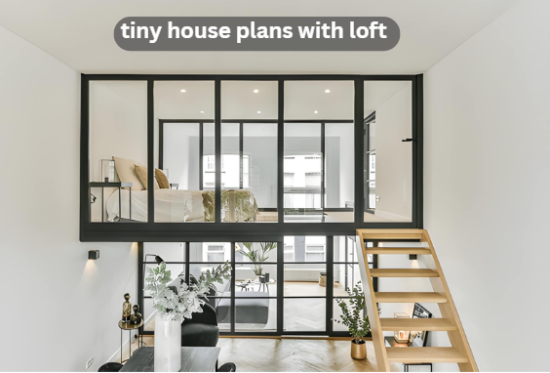
Loft floor plans are tiny house plans with loft that incorporates a higher area above the living area. This area is often too short to stand upright, so it is not a whole second floor. Instead, it is a raised area that provides additional space without making the house bigger. The majority of the lofts are converted into 2 bedroom tiny house plans; they may also be storage areas, offices, or even relaxation areas. The loft is usually built above the living room, kitchen, or bathroom. It is typically accessed by using a ladder or small stairs. This is aimed at creating additional space without making the home elaborate. A loft can easily cause a small house to seem bigger than it is, in the case of a good design.
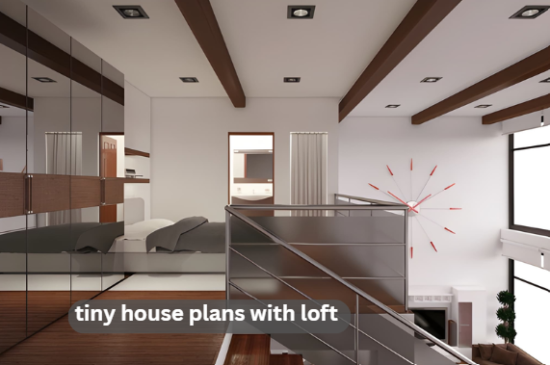
Reasons why people prefer Loft Designs
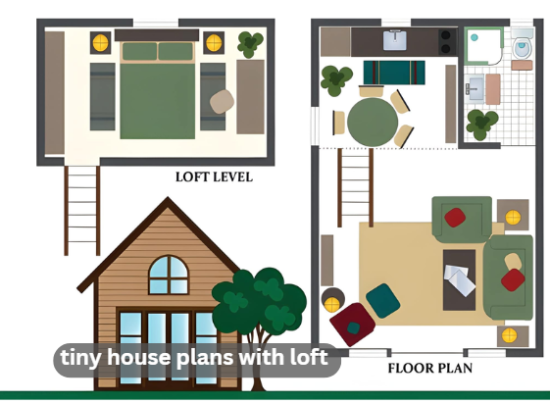
The fact that tiny house plans with a loft offer a solution to the most significant issue encountered in small homes: floor space. A small house can feel so cramped without a loft, and it must accommodate a bed, a kitchen, a bathroom, and a seating area. A loft will allow you to take your sleeping space off the first floor. This will create space underneath for daily chores such as cooking, working, or resting. It also brings better division of living and sleeping space, making the home look more organised. Loft plans of tiny houses are also affordable. Building construction is typically less expensive than a horizontal extension. This makes the loft designs very attractive to low-end builders and homeowners.
Critical Loft Dimensions and Space Planning
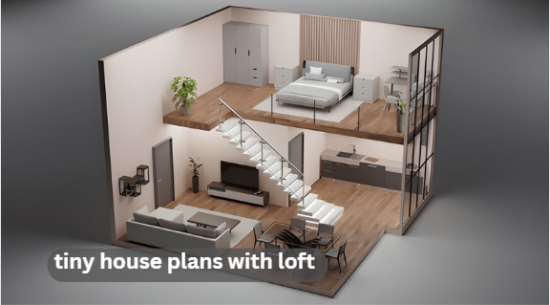
Lofts are not always comfortable. The dimensions matter a lot. Designers suggest a 200 sq ft tiny house plans loft. This provides sufficient space for a mattress and movement. Another critical factor is that of headroom. The clearance most people need to sit up in bed is 30 to 36 inches. The ceiling height below the loft must be usable. Ideally, the clearance should be 6 feet 4 inches to 7 feet to allow occupants to stand comfortably in the main living area. Good tiny house plans with a loft carefully consider the upper and lower spaces.
Ladder vs. Stairs
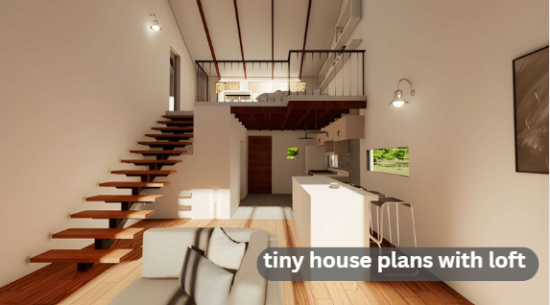
The design choices for reaching your loft are among the most critical. Ladders are widely used in tiny house plans with cost to build because they take up very little space. They are inexpensive, simple to install, and not complicated. Ladders, however, are not easy to climb, particularly for the aged, children, or those with walking difficulties. They are also inconvenient for carrying things like blankets and pillows. Using stairs is the safest and most convenient option. It has been done in many tiny house plans with a loft, using compact stairs with built-in storage underneath. This transforms wasted space into functional space. Some designs combine the tread stairs, also known as the hybrid stairs. These are not as steep as regular stairs and are considered safer than ladders. They are an intermediate between several people.
Sleeping Loft Design Requirements
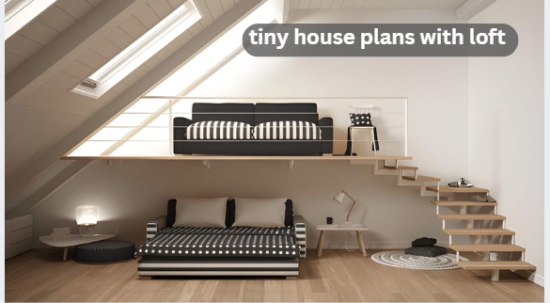
The majority of tiny house plans with loft designs include a 2 bedroom tiny house plans free in the loft. This has the main floor open and available to use during the day. Lighting is critical in a sleeping loft. The space is not as enclosed with windows or skylights. They also enhance ventilation, and this is important in small houses. Another essential is the safety rails. Falls are avoided by using a strong railing that allows free movement of air and light. The choice of mattress also counts with many individuals adding curtains or sliding doors to have privacy.
Multi-Purpose Loft Ideas
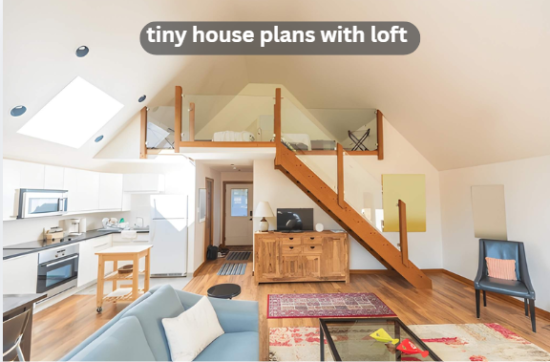
There are a few tiny house designs with lofts that unite several functions in one room. A loft may be used as 2 bedroom tiny house plans and a little workspace. Others include a reading nook, a meditation centre, or a hobby corner. This will be effective in cases where the loft is a little larger than usual. The loft can be more practical, even with a small desk or a shelf, making multi-purpose lofts more feasible for working at home, studying, or for people who are more creative and need a quiet area.
Lighting and Air Ventilation in Lofts
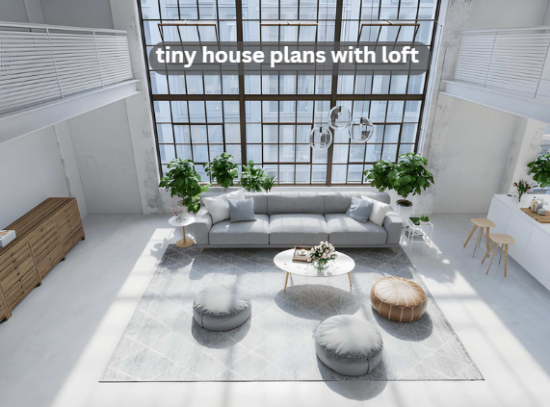
Unless properly designed, loft tiny house plans can be stuffy. The hot air will be in the loft, and thus the loft will be warmer than the rest of the house. Ventilation is necessary. Skylights, roof windows, or high-side windows help bring in fresh air and natural light. Lofted tiny house plans are also free tiny house plans and include small ceiling fans to enhance air circulation. Cross-ventilation is desirable. This implies that windows should be positioned so that air can pass through the loft and the main floor. Small houses are much more comfortable to live in because of good airflow.
Examples of Popular Loft Layouts
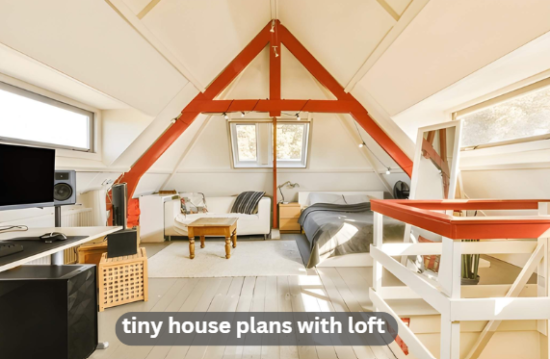
- Various popular tiny house plans with a loft demonstrate the efficient utilisation of loft space.
- Others are such that the loft area is above the living room, with the kitchen and bathroom on the ground floor. Others also added a loft over the kitchen to ensure the living area is open and airy.
- Other plans have 200 sq ft tiny house plans: one for sleeping and the other for storage. This is typical of slightly bigger, smaller houses. Each layout has its advantages. The most perfect tiny house plans use a loft, depending on how you intend to use your space daily.
Advantages of Loft Living
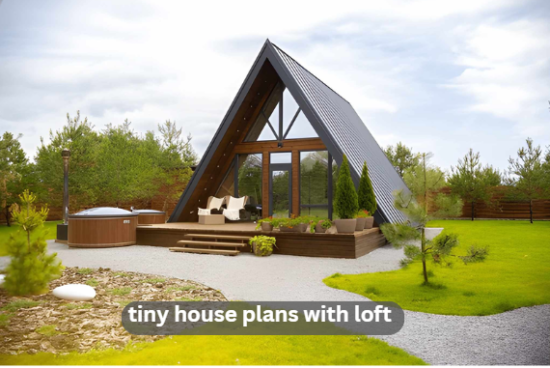
- Loft tiny house plans with cost to build are desirable. They make use of space, but do not enlarge the house. They establish a definite distinction between the sleeping and living spaces. They also add visual interest and character to the interior.
- Lofts will help transform a small house into a small home instead of a 2 bedroom tiny house plans free. Lofts can also be beautiful to people who like comfortable, high sleeping areas.
Challenges and Drawbacks
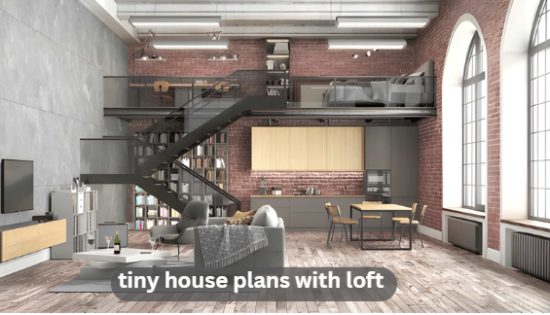
- Lofts are not ideal for all. Even going up and down every day may be inconvenient, more so at night. This can be frustrating to people who have to visit the bathroom regularly.
- Some people do not feel comfortable with low headroom either. Failure to stand erect may not be quick to adapt.
- There is also the problem of heat and airflow. Lofts will be too warm without good ventilation.
- These challenges should be honestly considered before committing to tiny house plans with a loft.
Codes and Safety Requirements of Building
- The United States has different building codes. Certain regions are rigid regarding the height of the loft, type of rails, and the construction of the stairs.
- Most codes require guardrails in case the loft exceeds a certain height. Others need a minimum amount of habitable space.
- When your small dwelling is on wheels, it might be subject to different laws than a dwelling resting on a foundation. Local laws must always be considered to ensure that you finalise your design.
- Observing safety measures keeps you safe and prevents expensive changes in the future.
Conclusion
Loft plans and tiny house plans with lofts are no longer a trend. They provide an effective solution for people who want to live with less while remaining comfortable in their homes. A well-planned loft can make a small house feel larger, more systematic, and more practical. Rather than crowding everything into a single floor, it is possible to divide sleeping, living, and storage spaces intelligently. You must have room to sleep in comfort, room to lift the head, and room to move the legs below to such an extent that the main floor will not be crowded. When these features are combined, the free tiny house plans can be open, comfortable, and efficient at the same time. Lighting and air circulation arehighlyy significant in making the loft feel all the aforementioned things at once. The presence of skylights, windows, and adequate air flow can be a great boost to comfort, particularly during hot weather. In their absence, a loft may end up stuffy and uncomfortable. The other important consideration is access. Some individuals are comfortable with a ladder, and those who are comfortable with stairs with built-in storage. The selection you make must fit in your daily routine, age, and physical comfort. There is no universal choice. Safety must never be overlooked. Good, sturdy railings, good construction, and strict compliance with building codes can, in turn, keep you safe and make your home a better long-term investment. Having shortcuts here can lead to difficulty in the future.